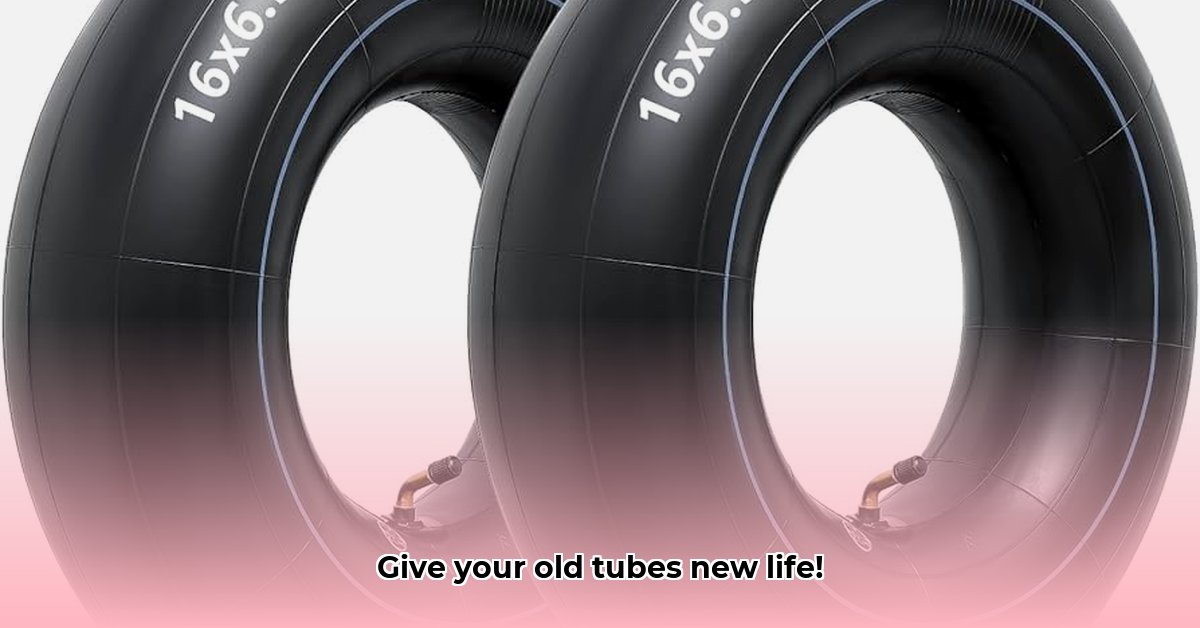
Those discarded lawn tractor inner tubes—often tossed aside without a second thought—represent a significant environmental problem. Millions end up in landfills annually, contributing to pollution and resource depletion. While precise data is scarce—highlighting a crucial research gap—the sheer volume suggests a substantial issue demanding attention. These tubes, primarily composed of rubber and other materials, decompose slowly, creating a persistent environmental burden. But there's hope! For specific lawn tractor part diagrams, see this helpful resource. Let's explore practical solutions to transform this waste stream into a valuable resource.
Repurposing and Recycling: Giving Old Tubes New Life
Instead of landfill disposal, let's explore resourceful methods to extend the lifespan of these inner tubes. Here are some actionable strategies:
Direct Reuse/Repair: A Second Chance for Your Tubes
Many inner tubes can be salvaged with simple repairs. Before discarding, perform a thorough inspection for punctures or tears. Small holes are easily patched using a standard tire repair kit (available at most auto parts stores). A deep cleaning with soap and water, followed by thorough drying, removes dirt and grime that can compromise rubber integrity. Finally, carefully reinstall the patched (if necessary) tube, inflating to the manufacturer's recommended pressure. Overinflation damages the tube; underinflation compromises your lawn tractor's performance.
Upcycling: Turning Trash into Treasure
The durable rubber in these inner tubes offers far more potential than simply containing air.
- Protective Covers: Cut and shape sections to shield vulnerable equipment parts from damage. Imagine protecting delicate engine components or sensitive wiring harnesses.
- Custom Gaskets or Washers: The resilient rubber is ideal for crafting custom gaskets or washers, creating watertight seals or preventing leaks in various machinery.
- Creative Applications: Entrepreneurial farmers have used inner tubes for planters, makeshift hoses, or even unique garden decorations.
Recycling: The Challenges and the Rewards
Recycling rubber poses significant challenges. Current methods often prove cost-prohibitive, particularly on a small scale. Butyl rubber tubes (often marked with a blue stripe) are currently the focus due to their consistent properties. However, innovation is key.
- Community Initiatives: A collection system, where farmers and businesses gather used tubes for centralized processing, could transform this waste stream.
- Technological Advancements: Ongoing research explores more efficient and cost-effective means of rubber recycling. Breakthroughs could revolutionize agricultural waste management.
Material Modification: Enhancing Durability and Reusability
Scientists are exploring ways to modify the rubber's properties. This might include adding reinforcing agents to increase longevity or incorporating bio-based materials to promote environmental friendliness. This research shows considerable promise for creating more sustainable farming practices.
Roadblocks and Breakthroughs: Challenges to Overcome
Despite the promise of reuse and recycling, significant hurdles exist.
Economic Barriers: The Cost Factor
The cost of processing and recycling rubber often outweighs the cost of producing new tubes. This economic imbalance acts as a major disincentive. This highlights the need for government incentives and investments in innovative recycling technologies.
Technical Limitations: Degradation and Compatibility
Rubber's inherent tendency to degrade over time, coupled with the challenge of ensuring consistent material compatibility across different types of rubber, presents significant technical difficulties.
Regulatory and Logistical Challenges: Streamlining the Process
Lack of standardized regulations regarding the collection, processing, and disposal of agricultural rubber waste hampers large-scale recycling initiatives. Streamlining these processes is crucial for successful implementation.
The Future of Inner Tube Sustainability: A Collaborative Approach
Addressing this waste issue requires a collaborative effort involving manufacturers, researchers, and waste management companies.
Research and Development: The Path Forward
Further research is crucial. We need detailed lifecycle assessments to determine the environmental impact of various recycling methods. In-depth analysis of inner tube composition will help tailor recycling technologies towards specific material properties.
Industry Collaboration: Breaking Down Barriers
Closer collaboration between manufacturers, researchers, and waste-management businesses is pivotal in developing innovative and efficient recycling solutions that are both technically sound and economically viable.
A Call to Action: Sustainable Farming Starts with Us
Don't discard those old inner tubes! By embracing reuse, upcycling, and investing in innovative recycling technologies, we can transform a significant environmental burden into valuable resources. Sustainable farming practices start with mindful waste management. Let's collaborate to create a greener, more sustainable agricultural future.